

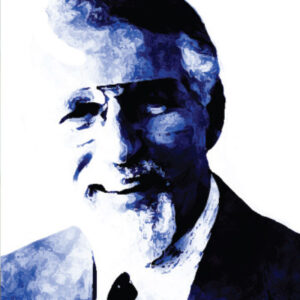
David Pawson teaches what the Bible says about Grace and Salvation. South of Reading Christian Fellowship 2011
To Christians, the word “grace” is “one of the most precious words in the whole language”. But this “generous, undeserved gift of God” has been misunderstood and David Pawson argues that both Augustine, who believed it was solely God’s will that does the saving and the monk Pelagius, who thought it was “all a matter of the human will”, were wrong. He also examines the Reformers’ views — arguing against the Calvinist position that there is compulsion in being saved and for the Arminian position that a human response to God’s grace is required for salvation.
David asks who does the saving — God alone, individuals, or God with our co-operation. Arguing for the latter, he regards “sovereign grace” as inconsistent with the God of the Bible, who desires “that all men should be saved” and can even “change his mind” in response to our prayers. We have a responsibility “to receive the gift of salvation”, which means that God cannot be blamed “for those who do not end up being saved”.
David teaches that to begin to be saved we need to do four things: Repent of our sins, believe in the Lord Jesus, be baptised in water, and receive the Holy Spirit. The three-stage process of salvation lasts throughout one’s life. It begins when we are justified by faith, setting us free from the penalty of sin; it goes on when we are sanctified by the power of the Holy Spirit, setting us free from the practicality of sin; and it is completed when we are glorified, setting us free from the possibility of sin. This involves ongoing belief and trust in God and obedience to him.
To understand grace, we need to know what Jesus is saving us from. It is not hell, but rather our sins — “every one of them”. He does this so that we can enter the new Earth “restored to the image of God”. “Grace” is reserved for those who begin to be saved and go on receiving his saving grace until one day he has saved them completely. It is neither an irresistible force, by which God compels people to be saved, nor unconditional forgiveness.
David explains why this unconditional forgiveness/grace teaching is unbiblical and stresses the importance of ongoing repentance (“We not only need grace at the beginning of the Christian life, we need it all the way through.”). He also attacks the unscriptural phrase “the unconditional love of God” as well as the “free grace” teaching that belief alone is sufficient and there is no “need to repent to be forgiven”, and that “God’s forgiveness includes “all your future sins as well as your past” sins. Instead, we need to “go on confessing our sins”, and then “he is faithful and righteous to go on forgiving”, and “the blood of Jesus goes on cleansing us”.
David argues that the unbiblical phrase “once saved, always saved” has led many Christians into “a false assurance”. Once we have started on the way of salvation, we do not “finish on it automatically”. In the Bible, believers are warned repeatedly “not to lose what they have found in Christ”, and Jesus warned his own born-again, believing disciples about hell frequently. It is “those who overcome temptation inside and persecution outside” who “will be fit for the new world”.
A free to download PDF booklet called ‘Grace and Salvation – Generous, Undeserved, Co-operation’ that accompanies this video can be downloaded from www.explainingbiblicaltruth.global
Free resources and a library of Davids teachings are available from www.davidpawson.org
©️David Pawson Ministry CIO 2011
















Be the first to comment