






Purchase your DVD today: https://coldwatermedia.com/products-page/ancient
Ironically, both auto racing and Rome’s catastrophic fire had their origin in the same spot. Right here just south of Palatine Hill in Rome. At a place only a handful of tourists even know about, let alone take time to visit. This lackluster dirt track — littered with debris from a recent event — once pulsated with the energy of thousands of Roman spectators hungry for something we moderns know a thing or two about: spectator sports.
The ancient Romans looked forward to the weekends, as much as any of us do today. They would take any opportunity they could to get out of their crowded tenements, into the open sun and take in a good sporting event.
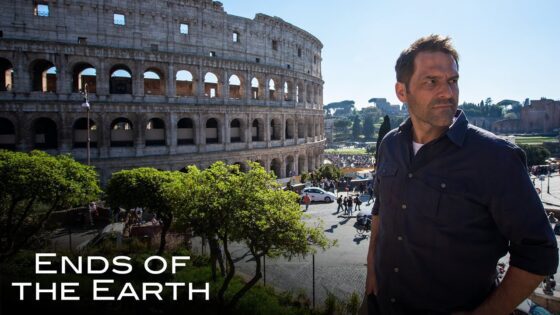
Granted, entertainment of the gladiatorial genre was a bit unseemly — but it was far from the most popular form of entertainment. It appears that the favorite brand of diversion was the bloodless (or nearly bloodless) kind. How do we know that? Well, the Colosseum, which began being built shortly after Nero’s death, would become the largest venue for gladiatorial games in the entire Roman Empire — and it had a seating capacity of up to 70,000.
But there was another facility in ancient Rome that could seat up to 300,000 people. That was this: the Circus Maximus.
The circus maximus was an elongated oval that eventually reached a size of 600 meters by 200 meters — roughly the area of more than 20 football fields. It was, in essence, a race track where the Romans flocked to watch the most popular sporting event of the time — chariot races. Gambling was as big an attraction for some as were the actual races. But passions ran as high for favorite teams and drivers then as they do among NASCAR fans today.
A day at the races consisted first of the pompa (it’s where we get our words “pomp” and “pompous” from), an elaborate procession of VIPs, teams, horses, chariots, even statues of gods and goddesses. After that, the crowd would settle for a day of races – anywhere between twelve to twenty-four of them, each scheduled for seven laps each. When lots were cast for pole position, the chariots would line up, the white cloth would drop and then “anything goes” for seven “circuits” of the “circus.”
FUNNY CIRCUS MAXIMUS LINES: YAH! YAH! I’m going to catch you!
Apparently it wasn’t unlike those scenes from Ben Hur, with the dirty driving, whipping and hitting.
FUNNY CIRCUS MAXIMUS LINES:
” Take that and that!”
“Is that a salad bowl on your head?”
“…and that and that!”
“Ouch! That hurts! And I just had myself waxed!”
“Yaaaahhh!”
“East dust!”
We know from ancient sources that some teams even resorted to drugging other teams horses and drivers, even casting magic spells on them.
FUNNY CIRCUS MAXIMUS LINES:
“That’s right…ahh…they love me! They love me! Thank you. Thank you very much! And not one hair out of place.”
The Circus Maximus was wildly popular bringing in literally hundreds of thousands of race fans. But, as is the case with auto racing today, not everyone saw the attraction. An historian named Pliny took in the Circus Maximus, then — quite unimpressed — wrote this: “The races were on, a type of spectacle which has never had the slightest attraction for me. I can find nothing new or different in them: once seen is enough, so it surprises me all the more that so many thousands of adult men should have such a childish passion for watching galloping horses and drivers standing in chariots, over and over again….”







Be the first to comment